
Semiconductor Manufacturing Trends Watch: The Deep Logic Behind AI Chip Delivery Delays in 2026
The semiconductor industry's path toward a trillion-dollar market value is not constrained by a lack of innovation, but is throttled by physical resources such as electricity, copper, and helium, as well as geopolitical constraints. Omdia's latest report shows that behind the AI chip delivery delays in 2026 is the combined effect of energy shortages, soaring material prices, and scarcity deliberately created by manufacturers.
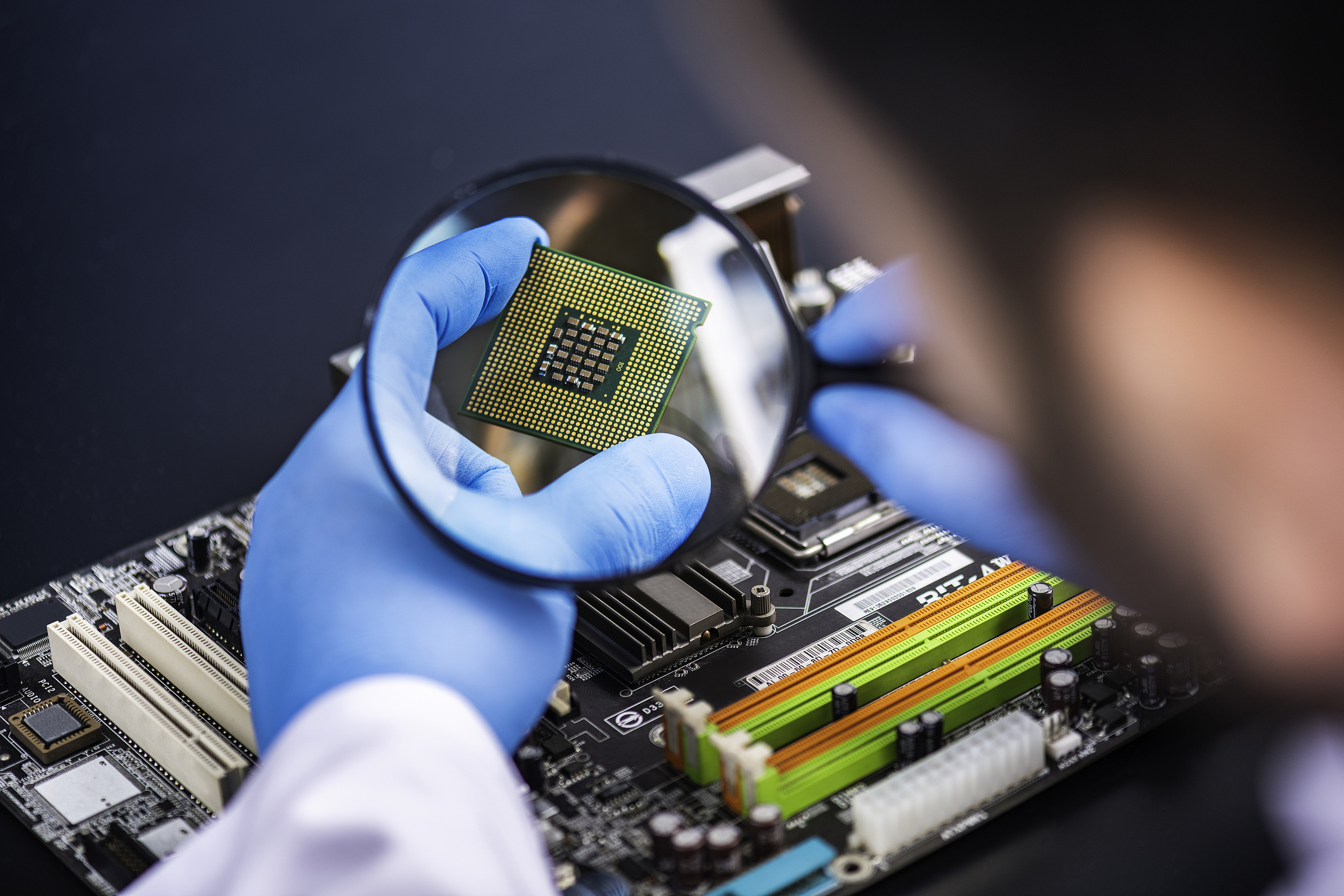

Data Center Delays: Why AI Chips Are Stuck in Transit in 2026
Omdia Chief Analyst Bruce Bateman analyzes: Amid rising AI demand, semiconductor supply is being hit by a 'perfect storm' of physical and geopolitical constraints.
Bruce Bateman is a part of Informa TechTarget'sOmdiasemiconductor division, where he serves as Chief Analyst. The views expressed in this article are solely those of the author.
The semiconductor industry's path to a trillion-dollar market value is not blocked by a lack of innovation, but rather stifled by a 'perfect storm' of physical and geopolitical constraints. Omdia's latest 'SemiDynamics Q1 2026 Report' indicates this is the period of greatest structural risk since the post-COVID industry adjustment.
While NVIDIA and Google continue to design ever more powerful AI accelerators, the reality of 2026 is severe shortages of electricity, copper, and critical gases. This is not just a temporary supply chain disruption, but a strategic recalibration—scarcity itself has become the most profitable product. Meanwhile, the 'physical AI' inflection point intensifies these constraints: humanoid robots and autonomous systems are moving from pilot projects to core infrastructure, spawning a massive new cycle of hardware demand.
Energy Bottleneck: The Dual Pressure of LNG and the Power Grid
Amazon, Microsoft, Google, Meta, and Oracle—the five largest hyperscale cloud providers—have committed to combined capital expenditures exceeding $660 billion in 2026, yet they face real-world barriers. AI-optimized data centers require 100 to 500 megawatts of power per facility—enough to supply an entire city—while grid expansion lags far behind.
The power issue is compounded by a new source of instability: liquefied natural gas (LNG). In March 2026, missile and drone attacks on Qatar's Ras Laffan hub during a regional conflict reduced global LNG supply by 20%. This event drove up electricity costs for energy-intensive fabs in Taiwan and South Korea, forcing a choice between residential heating and chip production.
The United States also faces critical power infrastructure bottlenecks: the grid interconnection queue has ballooned to over 2,100 gigawatts, exceeding total grid capacity; data center developers are being forced to reassess their 2026 construction timelines.Industry AnalysisIt is projected that 30% to 50% of planned data center capacity for 2026 will be delayed until 2028. Grid interconnection processes take three to seven years, while critical equipment such as transformers faces multi-year lead times.
Material Cornerstones: Shortages of Helium, Bromine, and Copper
The industry is facing severe shortages of the raw materials needed to build and cool these systems.
Helium is indispensable for wafer cooling and leak detection. Following the 2026 attack on Qatari production facilities—which account for one-third of global supply—spot prices have doubled. Fabs in Taiwan and South Korea are implementing helium rationing. This net supply gap could lead to reduced chip output.
Bromine, used in circuit etching and flame retardants, has surged to $12,000 per metric ton. Israel's ICL Group controls nearly 40% of global supply and meets 97% of South Korea's import demand, making this once-common mineral a strategic vulnerability amid geopolitical instability.
AI infrastructure is extremely metal-intensive. Each megawatt of data center capacity requires approximately 27 tons of copper for cabling and cooling. Copper prices hit a record $6 per pound in January 2026 and are currently around $5.61 per pound. Aluminum prices touched a four-year high of $3,544 per metric ton in early March and remain near $3,505 per metric ton. Data centers are aggressively bidding up prices, competing with traditional industrial sectors for these metals.
HBM's Artificial Scarcity and the Fab Paradox
High Bandwidth Memory (HBM) remains the industry's most profitable bottleneck. The three major manufacturers—SK Hynix, Micron, and Samsung—have pre-sold their entire 2026 capacity. Suppliers report HBM gross margins of 60% to 70%, far higher than standard DRAM. By deliberately creating scarcity, memory giants have escaped the 'commodity trap' that plagued them for decades.
Meanwhile, despite over $400 billion in fab investments spurred by the 2022 CHIPS and Science Act, new capacity remains out of reach. TSMC's Arizona Fab 2 has been moved up from 2028 to 2027, but Intel's Ohio timeline has slipped from 2026 to 2030. Existing fabs are temporarily halting production for 'silent rebuilds' to retrofit lines for High-NA EUV lithography equipment. These upgrades reduce output in the short term, ensuring supply remains tight and supporting premium pricing.
Scarcity Strategy
The 2026 semiconductor landscape is no longer about who can design the best chip, but who can secure the last canister of helium or the next batch of copper. This is not a crisis the industry is rushing to solve—scarcity grants semiconductor companies the pricing power they have long coveted. The era of high-volume, low-margin 'commoditized' chips is over. In its place is a new strategic model: the most valuable component of an AI chip is no longer the silicon, but the certainty of its delivery.
Investors and manufacturers must prioritize resilience to navigate this 'RAMageddon.' Adopting 'just-in-case' logistics and 'design-for-procurement' strategies—through long-term contracts and pin-compatible alternatives—will be critical for protecting margins and revenue visibility amid the physical and capital constraints of 2026.