
Self-Powered, Customized on Demand: A Decision Guide to Energy Independence for Manufacturers
The U.S. electricity supply-demand gap is expected to emerge within two years, potentially reaching 175 gigawatts by 2030. Manufacturers, whether or not they rely on grid expansion, face risks of outages, power quality issues, and costs. Behind-the-meter power generation (BYOP) offers a breakthrough, with fuel cells standing out due to high reliability, low emissions, and rapid deployment. This article reviews mainstream options and key selection criteria to support corporate energy independence decisions.
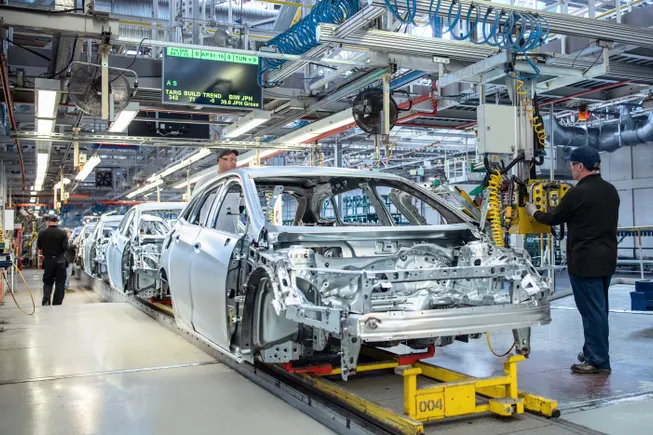
Manufacturing companies are facing increasingly severe challenges in securing grid electricity for new plants or expansion projects. The issue is not just long interconnection queues, but that the growth in electricity demand has outpaced supply growth. Experts predict that U.S. electricity supply will fail to meet expected peak demand within two years; by 2030,demand could exceed supply by 175 gigawatts—a shortfall large enough to power New York City twenty times over.
Even manufacturers that can rely on the grid to meet growth demand quickly find themselves not immune to the impact of supply-demand imbalances. Frequent grid outages, deteriorating power quality, and increasing price volatility are all driving up operating costs. For example, U.S. grid customers experience an average of 5 hours of outages per year, which for a 25-megawatt plant could result in$4.4 millionin losses. For plants running sensitive equipment, power quality issues such as harmonics and voltage sags can cause equipment trips, leading totens of thousands of dollarsin additional losses.
Onsite Power can solve all of these problems. This strategy, also known as "Bring Your Own Power" (BYOP), is a decentralized, distributed approach to power procurement. With BYOP, manufacturers no longer need to rely entirely on the grid for primary or backup power; instead, they can build their own power generation facilities at or near the plant. BYOP has been proven as an effective solution and has been successfully applied indata centersand large industrial customers, such asQuanta Computer、WalmartandFerrari。
There are multiple technology options for onsite power generation, and choosing the best solution is a critical and complex decision. Below is a brief overview of the available options, key trade-offs, and why fuel cells often stand out.
The most common onsite power options
Diesel generators and gas turbines
Diesel generators have long provided backup power for manufacturers during grid outages, but this technology is not suitable as a primary or supplemental power source for plants. "Diesel generators are not designed for continuous operation," said Kaushal Biligiri, Senior Energy Transition Expert at Bloom Energy. "Not only is it difficult to store enough fuel on-site to provide reliable power, but their emissions of harmful pollutants and high noise levels complicate the permitting process."
Natural gas turbines face similar environmental and noise issues as diesel generators, and they also have a large footprint and are typically too costly for most plants except very large manufacturers.
Solar and energy storage
Solar systems are attractive due to their clean energy attributes and declining costs. However, generating 1 megawatt of power typically requires5 to 7 acresof land, requiring considerable space if used as a primary power source. "There is also the intermittency issue," Biligiri added. "Large battery energy storage systems must be paired with it to ensure manufacturers receive reliable 24/7 power." Given the land requirements, scaling solar systems also presents significant challenges.
Fuel cells
Fuel cells are a mature technology that uses natural gas, hydrogen, biogas, or blended fuels to generate electricity through electrochemical reactions. "Because fuel cells do not burn gas molecules, they convert fuel into electricity with extremely high efficiency and produce almost negligible emissions," said Dan Degan, Corporate Sales Representative at Bloom Energy. "Additionally, they consume very little water and operate quietly, making permitting much easier."
Fuel cells also have a smaller footprint than other onsite power options—Bloom Energy's fuel cell systems can provide 100 megawatts of power on 1 acre of land—and their modular design makes them easy to scale.
How to identify the right primary or supplemental onsite power solution
When evaluating onsite power options for a manufacturing plant, the following key questions are worth considering:
1. What is the fuel source?
Consider the availability, reliability, and emission characteristics of the fuel.
2. How reliable is the solution?
Ask about uptime, maintenance requirements, and the ability to provide clean, stable power.
3. What is the Time to Power?
Confirm whether the solution (including interconnection considerations and supply chain shortages) can deliver power in time when needed. It is also crucial to understand how easily the solution can scale with business expansion.
5. Is the solution community-friendly?
Solutions with low emissions, low water consumption, and low noise help alleviate community concerns, are easier to permit, and advance corporate sustainability goals.
6. What is the total cost of electricity over the lifecycle?
Solutions with predictable costs that minimize price volatility risk will make it easier for companies to plan for the future.
Fuel cells: A reliable choice for onsite power
When evaluating onsite power options, it becomes clear why fuel cells are the preferred choice for manufacturers. They offer extremely high reliability, achieving up to five nines (99.999%) uptime with only 9% redundancy, and produce very low noise, emissions, and water consumption. Furthermore, fuel cells can provide high-quality, clean, and stable power within months rather than years.
Bloom Energy's solid oxide fuel cell (SOFC) Energy Server® power system is a flexible solution that can be deployed behind or in front of the meter under various contract models. Bloom's SOFC systems provide ultra-resilient, highly scalable onsite power to Fortune 500 customers across data centers, large utilities, and other commercial and industrial sectors.
For more information, you can download Bloom Energy's guide"Onsite Power: A Decision Guide for Manufacturers". The guide includes checklists for planning key dimensions of onsite power. Download it now to start planning your onsite power strategy.