
Intel announces $5.7 billion investment in Ireland to expand advanced chip production capacity
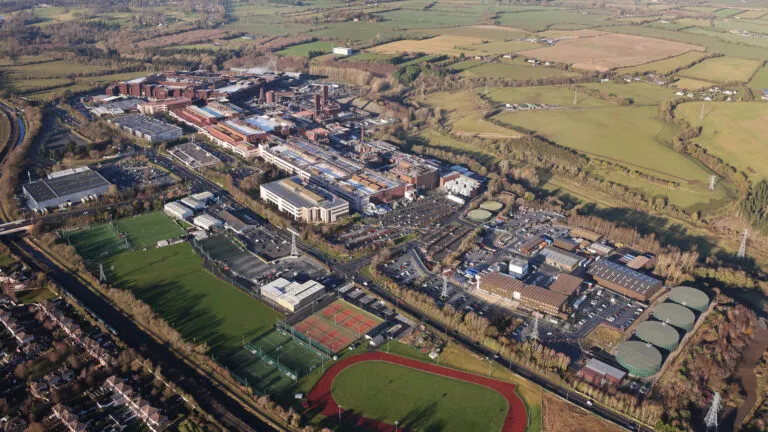
Intel announced on Monday that it will invest 5 billion euros (approximately $5.7 billion) to expand its Leixlip facility in Ireland, with a focus on increasing production capacity for Xeon 6 processors and next-generation chips. The project has already started this year, involving facility upgrades and new equipment, while advancing research and development and high-tech employment. Intel's cumulative investment in Ireland has exceeded 30 billion euros, and this investment further consolidates its European manufacturing footprint.
News Summary
- Intel announced on Monday that it will invest 5 billion euros (approximately $5.7 billion) to expand its facility in Leixlip, Ireland, to increase production of advanced data center and artificial intelligence chips.
- The project, which began earlier this year, will boost capacity for Xeon 6 processors built on the Intel 3 process and next-generation variants. The company also plans to advance research and development activities and create high-tech jobs.
- Intel said it will upgrade existing facilities and install new manufacturing equipment, including expanding automated track systems to improve production efficiency. A spokesperson declined via email to disclose specific details, such as the scale of capacity increase or changes in employee numbers.
In-Depth Analysis
Amid surging demand for AI and high-performance computing chips, Intel is making a major bet on its Irish campus. The Santa Clara, California-based company has invested over 30 billion euros (approximately $34 billion) cumulatively since establishing its plant in Leixlip in 1989. The campus is regarded as one of Intel's most advanced manufacturing sites and currently employs around 4,900 people.
In 2024, Intel formed a joint venture with private equity firm Apollo regarding its Fab 34 plant in Leixlip. Apollo invested $11 billion in exchange for a minority stake in the plant, providing Intel with "financial flexibility" during a difficult period as it spun off its foundry business and raced to catch up in the AI wave. However, at the end of 2024, Intel ousted former CEO Pat Gelsinger after recording a record quarterly loss of $16.6 billion.
Since then, Intel has focused on controlling costs and improving profitability under new CEO Lip-Bu Tan. In April, Intel reached an agreement to repurchase Apollo's 49% stake in Fab 34 for $14.2 billion, marking a turning point for the chipmaker as it sought to regain control of the high-tech plant. At the time, Intel CFO David Zinsner said the company had a "stronger balance sheet, stricter financial discipline, and a more mature business strategy."
Intel's latest investment plan will further solidify Ireland's position as Europe's leading semiconductor manufacturing hub. Naga Chandrasekaran, executive vice president of Intel Foundry, chief technology and operations officer, and general manager, said in a statement: "This 5 billion euro investment represents our firm commitment to maximizing capacity at the Leixlip campus and improving delivery capabilities for Intel Foundry customers."
In addition to manufacturing operations in the United States, Ireland, China, Malaysia, and Vietnam, Intel also has R&D-focused sites in Israel, Germany, and Poland. Last summer, as part of a massive cost-cutting plan, Intel canceled manufacturing projects in Germany and Poland, a plan that led to thousands of job losses. Additionally, under the U.S. CHIPS and Science Act, Intel received $8.9 billion in investment from the U.S. government in exchange for a 10% stake in the company, to build the U.S. semiconductor supply chain. Recently, Intel also co-invested $3.3 billion with 3DGS, a glass manufacturer headquartered in Albuquerque, New Mexico, to establish a substrate manufacturing plant in Odisha, India, according to Reuters. Substrates are used in semiconductor packaging and electronic circuits.