
Manufacturing Labor Gap: How Veterans Can Become a Key Supplementary Force
The U.S. manufacturing industry faces approximately 627,000 job vacancies, while over 200,000 veterans enter the civilian labor market each year. This article, using Army veteran Jakob Lejman's employment at Hino Motors as an example, combined with industry expert analysis, explores the match between veterans' skills and manufacturing positions, practical barriers in recruitment, and how companies can open talent channels through professional organizations and training programs.
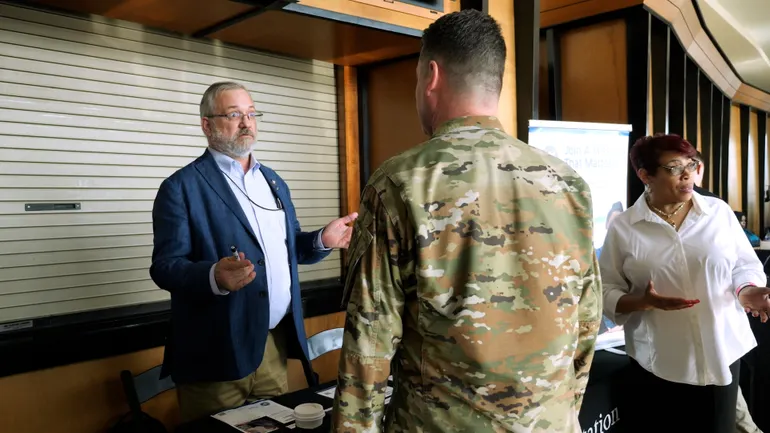
Before entering the Hino Motors Manufacturing USA plant in Arkansas in March 2023, U.S. Army veteran Jakob Lejman had never set foot in a production facility. The veteran, who holds a bachelor's degree from the Virginia Military Institute, worked in logistics throughout his eight-year Army career, most recently serving as a battalion-level operations officer responsible for managing hundreds of soldiers in logistics specialties such as supply, fuel, and distribution.
As his service obligation neared its end late last year, Lejman admitted he entered "desperation mode"—the challenge of finding a job as a civilian weighed heavily on him. "I was used to managing the operations of a large organization centered on logistics, but I didn't know what role my job title corresponded to in the civilian world," he said in an interview with Manufacturing Dive.
It was then that veteran recruiting agencies Bradley-Morris and RecruitMilitary contacted Lejman at Fort Polk, Louisiana. The two agencies helped him build a profile and match the skills he had learned in the military with civilian sector positions. With the help of Justin Henderson, senior vice president of sales at RecruitMilitary and a Marine Corps veteran, Lejman had successfully secured a position as assistant manager of production control at Hino, a Toyota subsidiary and supplier, by the time he retired from the military in March.

"When Hino gave me the opportunity, they hired someone with zero experience in a manufacturing facility," Lejman said. "They were betting on my leadership—'We can teach you leadership knowledge and skills in manufacturing, but you must first be a leader.'"
The natural fit between military roles and manufacturing jobs
Amy Thomas, national director of military and veteran programs for the "Heroes MAKE America" initiative at the Manufacturing Innovation Institute, noted that veterans are almost uniquely qualified for manufacturing positions. "From safety, maintenance, communications, to logistics, these are professional skills that soldiers learn in the military," Thomas said.
According to U.S. Department of Labor data, more than 200,000 military personnel transition to civilian life each year. Federal data further shows that over 6 million veterans hold a bachelor's degree or higher, and about 6 million more have some college or an associate's degree. However, despite roughly 627,000 open manufacturing positions as of September—with many companies reporting difficulty filling them—a 2017 report by Call of Duty Endowment and Zip Recruiter found that nearly one-third of veterans are underemployed or working in jobs that do not match their experience level.
About one in ten veterans work in manufacturing
In 2022, manufacturing ranked in the top ten industries with the highest percentage of veteran employment (as a share of all employed veterans).
Henderson added that beyond traditional educational qualifications, hundreds of thousands of veterans also have technical backgrounds due to their military experience. "The military is a bit like a leading trade school," said the Marine Corps veteran, noting that this skill set is prompting more manufacturing companies to seek partnerships with veteran-focused recruiting agencies.
Thomas also emphasized that veterans are adaptable, possess leadership skills, remain calm under pressure, and, due to overseas deployments or residence, are often culturally aware and skilled at working with diverse personalities. "When you look at these skills and then look at manufacturing's needs for production line, supervisory, quality inspection, safety, engineering, and maintenance roles, the two align almost perfectly."
Hiring barriers veterans face
Despite being well-trained, veterans often encounter obstacles when translating military skills into civilian corporate roles. The primary barrier is automated resume screening. "If the resume lacks specific keywords, the system will automatically reject it, and they won't even make it to the next stage of the application process," Thomas said.
Henderson pointed out that if a company's HR department lacks veterans or military family members—such as military children or spouses—manufacturers may also struggle to bring in veterans. Therefore, part of Henderson's daily work is communicating with companies to break down stereotypes about veterans and explain the value of specific military experience. Terms commonly found on veterans' resumes, such as "soldier," "officer," or ranks like "E3" or "E6," are difficult for those without a military background to understand, but they represent unique and valuable skills.
"Hollywood hasn't helped—we're not all Navy SEALs, door-breakers, or Delta Force operators," Henderson said. "We have administrators and drivers among us. Our work can range from introducing the veteran community to companies through job fairs, to direct recruitment, or developing an overall strategy to embed a company's brand within the veteran community."
"When you look at all these skills and then at manufacturing's needs for production line roles... they align almost perfectly."
—Amy Thomas, national director of military and veteran programs for the "Heroes MAKE America" initiative at the Manufacturing Innovation Institute
On the other hand, veterans may also lack understanding of manufacturing jobs and hiring companies—and manufacturers and their partners can bridge that information gap. "What I like about manufacturing is that it offers stability that other industries don't," Henderson said, citing long-time client Bridgestone as an example—people don't always buy a car, but they always need tires, which brings stable manufacturing jobs.
To improve veterans' awareness of the industry, Thomas said the "Heroes MAKE America" program has project managers at four U.S. Army bases in Kansas, Texas, North Carolina, and Georgia, who can introduce veterans, active-duty personnel, or military family members to manufacturing careers. The program also offers training and certification courses, including weekly tours of manufacturing plants to show how specific companies operate and what they produce.
"Through the Heroes program, we work to raise awareness and the image of these careers, because many workers think, 'Oh, I'm going to be on a production line, like in Laverne & Shirley,'" Thomas said. "But manufacturing has changed dramatically over the past decade. Once we get them into the plant, they often marvel, 'Wow, I had no idea,' and it truly opens their eyes."
For Lejman, working with recruiting agencies and deepening his understanding of manufacturing roles was key to his successful transition to civilian work. He also advises veterans to review their resumes, highlight core skills, and not underestimate themselves. "You have battle-tested leaders whose skills are sufficient to handle far more complex situations," Lejman said. "The key is finding ways to get veterans through the door and making that door feel welcoming for them to step through."