
Surge in labor demand for manufacturing megaprojects, labor shortage becomes a hidden concern
In 2020, chip giant TSMC selected a site in the Silicon Desert of Arizona for its $40 billion semiconductor plant, but three years later it faces a worker shortage. Industry data shows that similar situations are widespread, and labor shortages may hinder the manufacturing construction boom.
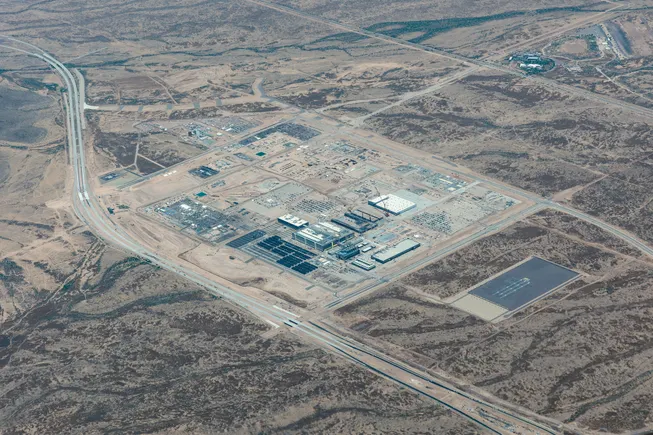
In 2020, chip giant Taiwan Semiconductor Manufacturing Company (TSMC) found an ideal location in the middle of the "semiconductor desert" in Arizona for its next-generation $40 billion semiconductor manufacturing plant.
But three years later, the Taiwanese chipmakeris struggling to find enough workersto support the plant's construction.
TSMC is not alone, it turns out.
According to industry sources, as billions of dollars in public and private funds pour into reshoring manufacturing construction, labor shortages are threatening the manufacturing boom and other construction activities in these hub regions.
Certain states—such as Arizona, Ohio, New York, and Texas—are rapidly becoming U.S.manufacturing hubs. This concentration is putting immense pressure on construction crews in these communities, said Anirban Basu, chief economist at Associated Builders and Contractors.
[SeeConstruction Dive's tracker of the nation's largest manufacturing projects]
"These projects are so massive that they create enormous demand for subcontractors and workers," Basu told Construction Dive. "To bring that much talent together in one place at the same time is very expensive."

That's because many of the skills needed to build, for example, an electric vehicle battery plant overlap with some of the trades required for other manufacturing projects like semiconductor facilities, said Brian Turmail, vice president of public affairs and strategic initiatives at the Associated General Contractors of America. In other words, megaprojects in these regions are competing for the same already-scarce pool of labor.
"Many of our member firms working on automotive and semiconductor construction are struggling to find enough workers to meet very aggressive schedules," Turmail said. "The pressure to get these plants built as quickly as possible is enormous."
Special considerations
Billion-dollar manufacturing projects require specialized construction techniques, including complex electrical engineering and the need for "ultra-clean spaces," which differ from typical building projects, Turmail noted. These facilities must use air pressure changes to prevent particles from entering rooms, adding another layer of complexity for contractors.
Basu added that many of these structures must also be resistant to vibrations and other environmental factors.
Some projects, especially those from General Motors, Stellantis, and Ford—the Big Three automakers in North America—also come with additional union worker requirements, Turmail said. This further narrows the pool of available workers.
For example, Ford announced in Februarya $3.5 billion investmentto build an electric vehicle battery plant in Marshall, Michigan, as part of a $50 billion overall plan to grow its EV business by 2026. GM announced in January nearly$1 billion in investments。
across four manufacturing sites. Large plants like these are not built easily. For example, Intel's$20 billion semiconductor manufacturing campusin Licking County, Ohio, will require about 7,000 construction workers, according toThe Associated Press.
The nationwide demand for construction workers highlights the tightness of the skilled construction labor force, Basu said.
"I emphasize the word 'skilled' because this is not ordinary construction; it's precision construction. You really need a highly skilled workforce, and that's exactly what we lack."
Subcontractors may also be working on these projects for years, meaning they must have the financial strength to carry the work through, he added.
"Because the stakes are so high, such as global market share in computer chips, the potential liability is also very large," Basu said. "Contractors have to deliver to specifications. If they don't, the negative consequences can be extremely severe."
Positions still open
Since the passage of the CHIPS Act in August 2022,manufacturing construction has been booming, but labor shortages could impact this rapid momentum.
Upcoming large-scale manufacturing projects
| Plant name | Location | Investment amount |
|---|---|---|
| Samsung chip plant | Taylor, Texas | $25 billion |
| Intel semiconductor plant | Licking County, Ohio | $20 billion |
| Texas Instruments semiconductor wafer fab | Lehi, Utah | $11 billion |
| LG Energy Solution battery complex | Queen Creek, Arizona | $5.5 billion |
| Hyundai Motor electric vehicle plant | Ellabell, Georgia | $5.5 billion |
The TSMC case illustrates exactly this kind of impact.
"There is a shortage of skilled workers with the specialized expertise required for the installation of semiconductor-grade facility equipment," TSMC Chairman Mark Liu said during the company's second-quarter earnings call in July.
As a result, the semiconductor giant sent Taiwanese technicians to Arizona to train local workers. However, due to the skilled labor shortage, the company ultimately delayed the start of production at its Arizona chip plant to 2025.
This lack of specialized labor is part of a larger trend ofjob openingsin the U.S. construction industry, which had 374,000 openings as of June. To fill the gap, Turmail said AGC members are redesigning plants to cope with labor shortages.

"(The labor shortage) is really changing how plants are built," Turmail said. "To some extent, it may affect costs, and it may affect schedules, but I think it's still unfolding."
Turmail also said that due to labor shortages, AGC members are including longer timelines in bids and raising their prices.
Short-term responses
Owners of these billion-dollar projects are offering higher pay to attract workers, said Ken Simonson, chief economist at AGC.
But thisfurther exacerbates labor shortages for other builders, as they may not be able to compete with those wages, Dorsey Hager, executive secretary-treasurer of the Columbus/Central Ohio Building and Construction Trades Council, told Construction Dive.
As a result, smaller contractors are offering additional perks beyond pay to attract and retain workers. This ranges from hot meals and heated restrooms on site to paid volunteer time and educational opportunities that may even extend to workers' families.
Calls for immigration reform
Despite these temporary adjustments, both Turmail and Basu advocate for some form of temporary worker visa program to alleviate labor shortages.
"Because we have this short-term emergency need, we really do need more global talent to help us get these manufacturing plants up and running, not just semiconductors but also batteries, alternative energy, and EV projects," Basu said. "(The U.S.) needs these skills, whether from Taiwan, South Korea, Germany, France, or anywhere else, we need them."
Carlo Scissura, CEO of the New York Building Congress, said this move would help fill thehundreds of thousands of open construction positionsin the U.S. However, Turmail added that immigration reform is not currently a priority for lawmakers.
"Frankly, we are not optimistic that the current political climate can advance responsible immigration reform," Turmail said. "Both parties find it too easy to demagogue this issue rather than take real action."