
Digital Twin: How Eplan and Rittal Turn Design Efficiency into Business Growth
Manufacturing enterprises often lose efficiency and profit due to information gaps between design, procurement, and production. Eplan and Rittal integrate the process from design to delivery into a single data chain through digital twin technology, eliminating manual handover steps. The case of R&D Specialties shows that after adopting this solution, the team size was reduced from 14 to 8 people, productivity increased by 40%, and no additional hiring was needed.
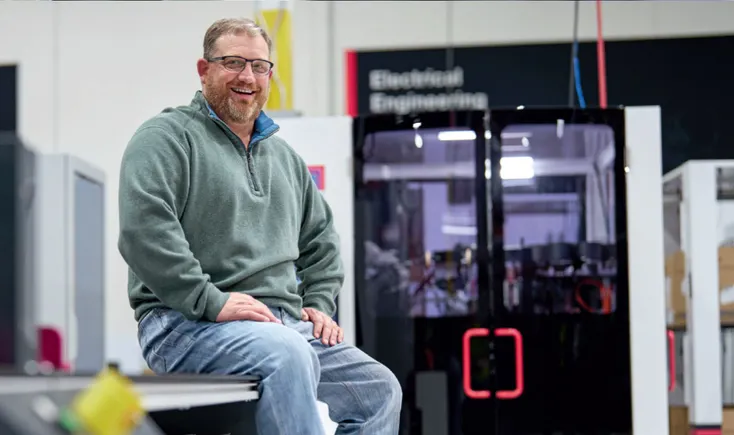
Brad Howell once faced a bottleneck that couldn't be solved through hiring.
His company, R&D Specialties, is a UL-certified manufacturer of electrical enclosures serving the oil and gas industry in Odessa, Texas, since 1983. To expand the business, he needed more skilled workers, but finding suitable candidates in the market was difficult, and adding untrained staff to a UL-certified shop floor was not feasible. The bottleneck wasn't a lack of demand, but a gap between the team's design capacity and its actual manufacturing capacity.
This gap is the true cost center in manufacturing, and most companies have never quantified it. Manufacturing leaders spend millions optimizing production, but the biggest source of waste occurs before machines even start.
The Gap That Eats Profits
When a project moves from design to procurement, manufacturing, and wiring, information can be lost at every step. Drawings become bills of materials, bills of materials become purchase orders, and the materials in those orders drive shop floor equipment. Each handoff may involve re-entry, reformatting, or even loss of information, and delays accumulate downstream.
This is where money leaks. An engineer changes a bill of materials, but procurement has already ordered long-lead items that are no longer applicable; a supplier delays delivery, but no one informs the shop floor; a wire harness is assembled correctly only because a senior technician remembered the drawing, rather than the drawing actually reaching the shop floor.
These are not technical failures. Engineering is sound, procurement functions, and manufacturing is skilled. The problem lies in the handoffs between them. Because each delay seems minor, costs stay hidden beneath the surface: expedited shipping from suppliers, rework of bills of materials, and explaining delays to customers. Multiply this by every project on the shop floor, and it ultimately shows up where management feels it most: shrinking margins and missed deadlines.
Why the Gap Exists
Most manufacturers didn't actively design this problem; it developed as the business grew. Design, procurement, manufacturing, and lifecycle management each run on separate tools that were added as needs arose and were never intended to communicate with each other. Every connection between tools relies on manual effort, done through emails, spreadsheets, or Slack messages that might be missed.
This is 'technical debt' with compound interest. A single missed update on one project is just a rounding error, but the same gap repeating across every project, every workstation, and every quarter becomes a structural drag on the business. The cost is invisible in a single order but clearly visible on the income statement.
The solution isn't adding more layers of management, but eliminating the manual translation steps altogether.
Bridging the Gap: A Single Thread from Design to Delivery
Eplan and Rittal replace handoffs with a shared thread. Eplan's engineering software creates a digital twin that serves as the single source of truth from concept to lifecycle management; Rittal transforms digital intelligence into standardized, scalable manufacturing capabilities through integrated infrastructure, automation, and off-the-shelf components.
Eplanis the software layer. It carries a project from initial layout through electrical design, mechanical coordination, component procurement, system programming, and wiring, all the way to long-term lifecycle management. Every stage writes to the same database, so any design change is immediately visible to procurement and manufacturing. That database is the digital twin: one source of truth, rather than a project being translated five different ways across five teams.
Rittalis the hardware layer that makes the data manufacturable. Modular industrial enclosures, climate control, and power distribution systems are all built into Eplan's engineering library. Together, they guide the CNC machining, wire preparation, and assembly of Rittal's automation systems, all driven by a single source of truth without step-by-step handoffs. Rittal's manufacturing and modification center in the United States also removes the uncertainty of overseas custom manufacturing lead times; production can be done locally, and schedules are pre-planned by the design data.
Together, they turn a project that once had to be converted across multiple formats into one that flows from start to finish in a single system. Design no longer hands off to procurement; it directly guides procurement. Procurement no longer hands off to manufacturing; it configures manufacturing. The thread doesn't break because there are no handoff steps left to break.
This is what managers who lose sleep over projects want: not better handoffs, but no handoffs at all. Will parts arrive on time? Will deadlines be met? These questions are answered by the same system that executes the design, because that system is the one manufacturing the parts.
Proof: Bridging the Communication Gap
R&D Specialties is proof of how bridging the gap impacts a business.
After visiting Rittal's application center in Houston, Howell adopted Eplan Electric P8, Eplan Pro Panel, and the Eplan Data Portal, along with Rittal's Perforex machining center and Wire Terminal automation. Today, R&D's software and hardware thread runs as one system, not two separate parts.
In less than a year, work that once required 14 people now takes only 8. Productivity rose 40%, not by hiring the skilled workers Howell couldn't find, but by eliminating the manual handoff steps that consumed existing team time. Beyond productivity, throughput also increased because the extra people previously tied up in the original workload now have surplus hours. Operations that once relied on institutional knowledge built up over years are now driven by data that flows with the project. Growth is no longer constrained by headcount.
Key Takeaway
Manufacturing's biggest inefficiencies often appear between departments, such as re-entered bills of materials, missed updates, or drawings that exist only in someone's head. Eplan and Rittal bridge the gap by providing a single continuous thread for design and production, rather than five broken handoffs.
Experience It Yourself:Visit a Rittal application center or explore Eplan and Rittal resources to plan your own path from design to delivery.