
Data center construction demand boosts, Deere raises sales outlook
Deere & Company raised its 2026 sales outlook, benefiting from increased orders for construction equipment driven by data centers and large infrastructure projects. The company's construction and forestry division saw quarterly sales up 18% year-over-year, but the agricultural division still faces challenges.
Quick Overview
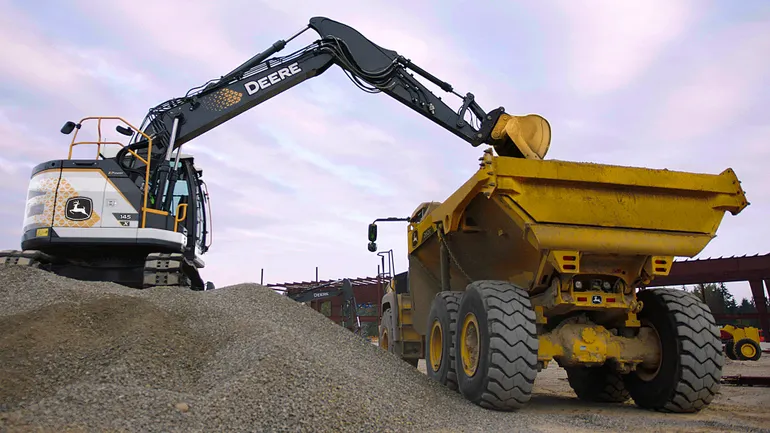
- Deere & Co., a manufacturer of tractors, bulldozers, and other equipment, has raised its 2026 sales outlook by $250 million, citing strong order trends in its construction and forestry division, with demand supported by data centers and large infrastructure projects.
- The Moline, Illinois-based company raised the lower end of its full-year guidance from $4.5 billion to $4.75 billion in its latest earnings report released Thursday. In the quarter ending August 2, construction and forestry division sales rose 18% year-over-year to $3.6 billion; division profits surged 84% to $436 million.
- Deere confirmed $110 million in tariff refunds in the third quarter, benefiting its small agriculture and turf equipment division. Meanwhile, sales and profits at its largest division—production and precision agriculture—declined due to rising input costs and uncertainty in trade flows dampening farmer demand.
In-Depth Analysis
Recently, companies supporting the construction industry are experiencing sales growth as demand for large infrastructure projects such as data centers, power grids, and manufacturing plants takes off.
Christopher Seibert, Deere's director of investor relations, said on Thursday's earnings call that the company's 2026 construction equipment order book is essentially full, with customer backlog extending into fiscal 2027. He also noted that adoption of its SmartGrade technology—a 3D slope control system for bulldozers that automates workflows—has grown more than 50% year-to-date, showing "strong momentum."
"While we have increased production across our construction factories, sustained order strength and retail momentum mean our current production is slightly below retail demand," Seibert said.
According to the latest market forecast, Deere expects the construction equipment industry to grow 5% to 10% this year. At the same time, the company also expects the global forestry industry to decline 10%. Dan Pulley, Deere's investor relations manager, said on the call that Deere's forestry outlook is based on "sluggish residential construction activity" and "weak log and lumber prices," which are dampening North American demand.
In the quarter, Deere's small agriculture and turf division (including mowers and golf course maintenance equipment) saw sales rise 12% year-over-year to nearly $3.4 billion. Seibert said demand in the division is positive, citing stronger cash flow levels for dairy and livestock customers, as well as improvement in the turf segment after "several years of inventory and demand adjustments." Division profits rose 28% year-over-year to $622 million.
Seibert noted that the small agriculture and turf division benefited from International Emergency Economic Powers Act (IEEPA) tariff refunds. Deere recognized $110 million in IEEPA refunds in the quarter but did not provide a detailed breakdown of benefits by segment.
Year-to-date, the company has received $382 million from IEEPA refunds and assumes no further refunds will be received in the remaining fiscal year ending November 1, 2026.
Deere's production and precision agriculture division (including large tractors and combines) posted weak earnings in the third quarter. Quarterly sales for the division were nearly $4 billion, down 6% year-over-year; division profits totaled $527 million, down 9%.
Deanna Kovar, president of Deere's global agriculture and turf division (production and precision agriculture), said on the call that farmers in South America and Europe face rising input costs and higher interest rates, creating a challenging market environment. The North American market is relatively stable but softer.
"The agricultural environment remains challenging, but we continue to believe 2026 represents the bottom of the agricultural equipment cycle," Chief Financial Officer Brent Norwood said on the call. "While the pace of recovery may be moderate and is expected to vary by region, underlying trends are moving in the right direction."