
Loftware leverages AI to optimize packaging and labeling processes
In the supply chain, product, compliance, shipping, and packaging data must be transmitted across multiple parties, and even the most robust internal AI management within a company cannot ensure that all trading partners have consistent information. Loftware's AI system, Loftware Connect, aims to address this pain point by using a publish-subscribe model with AI assistance, enabling suppliers, factories, logistics providers, and others to share unified label standards, reducing redundant work and errors. CEO Jim Bureau spoke with Manufacturing Dive, discussing how the system shortens the label template creation cycle (from 4-5 months to a shorter period), verifies shipping notices through real-time data checks (e.g., 50 products actually packed as 50), and advises companies to first move to the cloud to manage packaging and labeling issues from an enterprise-level perspective.
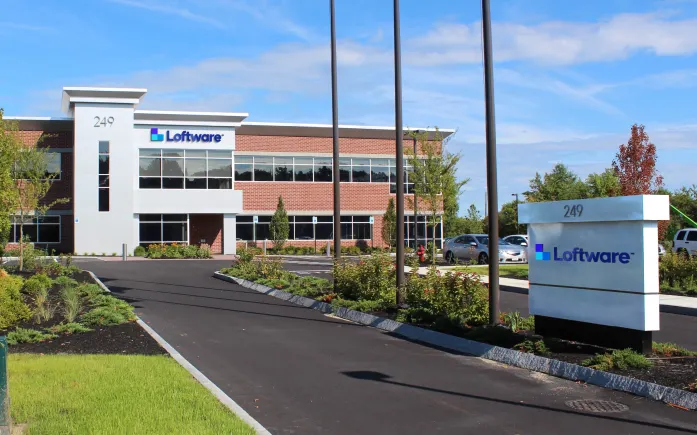
Many manufacturers are improving how they manage internal AI data through better systems, stricter governance, and clearer workflows. However, product, compliance, shipping, and packaging data must flow between multiple parties in the supply chain.
Therefore, even if a manufacturer's internal processes are robust, it is difficult to ensure that every trading partner is working from the same information.

Loftware has developed an AI-driven system called Loftware Connect that helps supply chain parties such as suppliers, factories, and logistics providers communicate information and coordinate operations.
"We put product packaging and labels on goods so that when they are handed over, the relevant people know how to handle them," said CEO Jim Bureau. "If you are a supplier, I can say to you: 'Hey, when you ship to me, please make sure you meet this standard.' That is difficult for a supplier because you may have hundreds or thousands of customers to deal with."
Bureau recently spoke with Manufacturing Dive about communication issues between different companies in the supply chain.
This interview has been edited for clarity and brevity.
Manufacturing Dive: Please elaborate on the services Loftware provides.
Jim Bureau:One of the challenges is, if I want to define how to do business with you, how do I make that process simple? Our system, Loftware Connect, allows me to define the specifications for packaging and shipping labels and publish them to you. This means you do not need to rewrite the labels.
The old way of working was: you define the specifications, and then you have to write label software to implement them. This has led to a proliferation of label templates at large manufacturers over the years. We have customers who need to manage 60,000 to 70,000 label templates.
With our AI system, you can say: "I am shipping a new product to Apple, and it is of this type. Do I already have a label that meets this standard?" You can search using our system, thereby reducing that number of 60,000 to a more manageable scope.
If you do not have an existing label, we can help determine the standards Apple requires and use AI to generate a template that meets those standards. If you are my supplier and I ask you to do this, there needs to be back-and-forth communication about how I expect to receive goods. Then you have to build the template, let me verify it is correct, and actually put it into production. For a single product, this typically takes 4 to 5 months. If I am IKEA, with thousands of products, the workload is enormous. We help companies accelerate this process.
How do AI systems like yours help prevent communication breakdowns between companies in the supply chain?
A common situation is that every company is running its own internal AI projects. That is good, but the supply chain is highly dependent on goods moving in and out.
We have automotive industry customers who receive advance shipping notices telling them what goods are arriving. But inevitably, we find that even with these systems, I send a notice saying you will receive 50 units of a product, but when you open the box, you find only 30, or the product mix is wrong.
Loftware Connect allows trading partners to see every item actually produced on the production line, as well as the actual contents when packed and before leaving the factory. We link these two together and check them against the advance shipping notice to confirm: "You expected 50 units, 50 units were actually packed, and the contents are correct." If I can catch this early, as an automotive manufacturer, I can save a lot of time on the production line and increase throughput.
How did these packaging and labeling issues originally arise?
It is just a gap that has existed for many years.
Your supplier requires you to comply with its packaging standards, and you must do so. The usual practice is to go into the labeling and packaging system, create the standard you want to follow, take a photo, attach a 25-page packaging specification document, and email it to you. Then you go into the same system they just used and "reinvent the wheel."
Even using only Loftware, I can say to an automotive manufacturer: "Who are your suppliers?" It is likely that 60% to 70% of their suppliers are our customers. So, if I can solve this just within our own system, getting them to adopt a publish-subscribe model and apply artificial intelligence—because now all the data is in one place—this would completely change how companies handle packaging and labeling issues in the supply chain.
What should manufacturers do first to alleviate the packaging and supply chain issues mentioned above?
When people think about packaging and labeling, these decisions are often made at the local level. A business unit in a region encounters a problem, and then a decision is made on what seems like a tactical issue. But add up those decisions, and if you are a large company, scaling that to a huge platform becomes a mess.
So, whether you use Loftware or not, you need to think about this from an enterprise-wide perspective. First, you need to move to the cloud. If you are on the cloud, regardless of your trading partners, you can manage your own business well first.
The cloud also opens up the opportunity to exchange real data with trading partners and ultimately control how they represent your products. When you change something at once, it ripples through the entire supply chain, and you cannot achieve that without being on the cloud.