
Boeing labor negotiations in trouble: union advantages highlighted
After experiencing a safety scandal, Boeing's negotiations with the IAM union have reached a deadlock. The union has demanded a 40% wage increase, and experts point out that Boeing faces multiple crises, giving the union an advantage.
Boeing is working to resolve a series of safety and manufacturing quality control issues since the January Alaska Airlines door plug blowout. However, the aircraft manufacturer still needs to address another area: its labor issues.
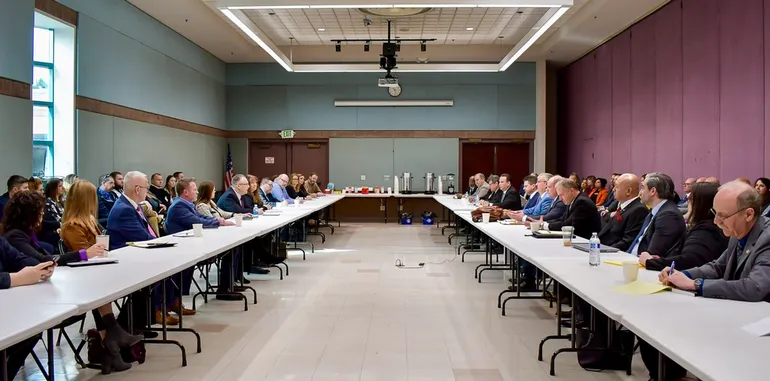
Boeing began negotiations in March with the International Association of Machinists and Aerospace Workers (IAM) District 751 and Local Lodge 63 of District W24 at its facilities in Puget Sound, Washington, and Portland, Oregon. This marks the first time the two sides have returned to the bargaining table in 16 years. The last time Boeing negotiated labor contracts with the two IAM districts in 2008, it led to a 57-day strike and forced key production lines to halt, according to a securities filing.
The IAM submitted a proposal to Boeing on March 8, outlining a list of desired contract changes, including a 40% general wage increase, reduced healthcare benefit costs, and enhanced job security for its approximately 33,200 members.
The union's current contract expires on September 12. As negotiations continue between the two sides, experts say recent scandals involving whistleblower congressional testimony and worker disconnect from leadership at Boeing may give the IAM the upper hand.
"Boeing is truly in a bind," said Ryan Stygar, a labor attorney at Centurion Trial Attorneys, in an email. "Union power is growing, their demands are more ambitious than ever, and Boeing must negotiate while facing multiple criminal, civil, and public image crises."
Boeing's problems become the IAM's advantage
Since the union last negotiated with Boeing in 2008, the company has experienced two fatal crashes, leading to a criminal investigation by the Department of Justice and resulting in 346 deaths.
"These negotiations take place against a doubly unique backdrop: unprecedented union power in the United States and the rapid weakening of Boeing's bargaining position," Stygar said.
Additionally, this year has seen extraordinary events, including the Alaska Airlines door plug blowout and the deaths of two whistleblowers in the past two months.
"Boeing is truly in a bind. Union power is growing, their demands are more ambitious than ever, and Boeing must negotiate while facing multiple criminal, civil, and public image crises."
— Ryan Stygar, attorney at Centurion Trial Attorneys
Vijaya Venkataramani, a professor and chair of the Department of Leadership and Innovation at the University of Maryland, said these recent events have not only damaged Boeing's reputation but also negatively impacted employees working on the aircraft.
"Boeing is a benchmark of American innovation, industry, and technological development," Venkataramani said. "When you think of people working at such a company, they are people who take pride in the work they do."
Nevertheless, Venkataramani said Boeing's problems could affect negotiations, giving the IAM leverage. Jon Holden, president of IAM District 751, said at a March press conference that the proposal included, for the first time in IAM 751's history, provisions related to the safety and quality of Boeing aircraft.
"We feel that we are often the last line of defense for the changes they make," Holden said at the meeting. "As union members, we are one of the few groups that have the right to speak out when the company does something wrong."
The union is also seeking a seat on Boeing's board of directors to have a voice in continuous improvement, according to a March report from the Financial Times.
Venkataramani noted that this move by the IAM could be part of its strategy to change the company's culture.
"For decades, the company has focused on profitability, schedule, and cost, and in the process, safety issues have been downgraded," she said. "All these events have undoubtedly strengthened the union's power and given it enormous leverage in these negotiations."
'Trust issues' are a key factor in negotiations
While Boeing continues negotiations with the IAM, the aircraft manufacturer has encountered obstacles with another union at its facilities.
On May 4, Boeing locked out its 125 private firefighters from the International Association of Fire Fighters Local I-66 after failing to reach an agreement before the contract expired at its Puget Sound and Moses Lake, Washington, facilities.
President Biden intervened in the negotiations on Thursday, encouraging both sides to return to the bargaining table.
Collective bargaining is about helping the rights of employers and employees.
I am concerned by reports that Boeing has locked out IAFF I-66 members. I encourage all parties to return to the bargaining table and reach an agreement that benefits Boeing and ensures these firefighters receive the pay and benefits they deserve.— President Biden (@POTUS) May 9, 2024
Jeremy Yip, an assistant professor of management at Georgetown University, said Boeing's negotiations with multiple unions involve interdependence among bargaining groups to achieve similar goals.
While Yip noted he is not personally familiar with Boeing's negotiations with the IAFF, recent scandals such as whistleblowers accusing Boeing of retaliation suggest a lack of transparency and trust. He added that negotiating with multiple parties could have reputational effects and impact negotiations similar to those with the IAM.
Yip said questions about the safety and stress airworthiness of Boeing aircraft trace back to perceptions of the company's "competence, goodwill, and integrity," qualities that influence how parties view its ability to fulfill commitments.
Last month, the Society of Professional Engineering Employees in Aerospace (SPEEA) filed a complaint with the National Labor Relations Board against Boeing, accusing the company of retaliating against two union members assigned as representatives of the Federal Aviation Administration.
The complaint followed Boeing quality engineer turned whistleblower Sam Salehpour's claim at a Senate hearing last month that he was threatened by supervisors after raising concerns about the Max 787 and 777 programs.
Stygar suggested the IAM could propose strict anti-retaliation rules for whistleblowers, require third-party investigations of anonymous reports, set timelines for Boeing to handle whistleblower reports, and seek pension benefit protections for whistleblowers.
"Boeing has been very short-sighted, and it (and its employees) are paying a long-term price," Stygar said in an email. "Now, the IAM has the opportunity to strengthen whistleblower protections."
Time pressure may affect negotiations
Yip said one factor that could help drive progress is the upcoming contract deadline.
Although the IAM and Boeing are four months away from the current contract expiration, both sides should set intermediate deadlines as negotiations progress.
"Time pressure often brings parties together, especially in contentious negotiations," Yip said. "They should not threaten 'I'll walk away if we don't reach a deal,' but they should ensure stricter deadlines are set to actually make progress."
Stygar added that if Boeing puts workers first, quality will follow. He also noted that the best "middle ground" solution is to narrow the communication gap between Boeing and its frontline employees.
"Boeing's fundamental problem is a culture of fear, reinforced through frequent and blatant retaliation," he said. "By returning to a culture where employee concerns are met with open responses, we will certainly see higher quality control."

