
Second-Chance Hiring: A Viable Path to Alleviating Manufacturing Labor Shortages
Amid persistent labor shortages, the U.S. manufacturing sector is witnessing a surge in "second-chance" hiring. At JBM Packaging in Ohio, about one-third of employees come from such programs, and its president credits this approach with supporting company growth. Data from Indiana's HIRE program shows that related interventions are associated with reduced recidivism rates. Experts emphasize that success requires comprehensive support, including soft skills training and life coaching, and recommend that companies seek external partnerships.
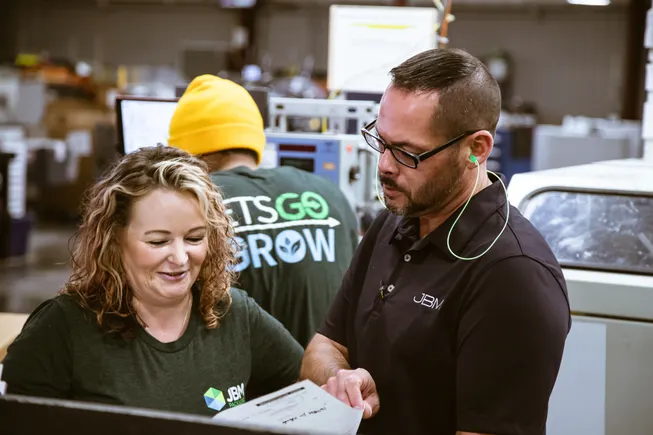
Five years ago, Amanda Hall couldn't imagine herself as a Talent Acquisition and Training Specialist at JBM Packaging in Ohio—she had just finished dealing with the justice system. Today, she was hired through the company's program specifically designed to provide employment and training for people with criminal records, and has gradually advanced to her current position.
"Before I was released from prison, I was very nervous, thinking: 'Once I leave the prison walls, how do I continue the progress of my rehabilitation?'" Hall recalled. "I might have a great resume, but no one would hire me. And a month before my release, JBM Packaging came to the prison."
To alleviate hiring challenges, more manufacturers are turning to "fair chance" or "second chance" programs. Both companies and newly hired employees report that these programs bring sustained, multiple benefits.
JBM partners with the Ohio Department of Rehabilitation and Correction to identify inmates nearing release who are suitable to fill open positions. Its fair chance program has been running for about seven years, and currently nearly one-third of the company's 150 employees are participants in the program.
"If they can't make a living, they often fall back into old patterns and end up back in prison," said Marcus Sheanshang, President and CEO of JBM Packaging. "The correctional system also wants this program to succeed because they don't want to see recidivism."
In Indiana, for example, data from the state's Department of Correction shows that the recidivism rate in 2022 was 29.79% (the proportion re-incarcerated within three years of release), significantly lower than the 37.9% in 2011—the year before the state launched the HIRE (Hoosier Initiative for Re-Entry) program. In 2012, the state's workforce development department helped create HIRE, aimed at helping people with criminal records reintegrate into society. Organizers say interventions are associated with declining recidivism rates; a 2017 study by Indiana University Bloomington also supports this conclusion.
"In the seven years I've been involved with this program, recidivism rates have continued to decline," said Jordan Baer, HIRE coordinator, noting that data shows 85% of reoffenders are unemployed.
Hall had turned to drugs due to childhood trauma and accumulated debt; to sustain her drug habit, she began selling drugs and eventually ended up in prison. She says that getting and keeping a job at JBM Packaging helped her settle down and grow. "I was able to focus on my work and rebuild my life. Within about six months, I paid off all my fines and fees and completed my probation."
Hall initially started at JBM Packaging as a junior machine operator. Despite having no prior manufacturing experience, she learned and excelled in the role. A few months later, she learned of an opening for a trainer position, applied on her own initiative, and successfully got the job. She then continued to advance within the HR department to a recruiting specialist. Today, she remains involved with the fair chance program, supporting other participants and handling recruitment.
According to Sheanshang, many of JBM's fair chance participants start in entry-level positions and then advance to supervisory roles. The company is also willing to hire people with criminal records into any open position, including logistics and leadership.

Meeting each other's needs
People with criminal records face fundamental barriers to employment, such as stigma or employers' reluctance to take a chance on hiring someone with a criminal history. They also "face up to 650 different rules and restrictions—what we call collateral sanctions—that hinder them from finding, obtaining, and keeping jobs," said Basette Smith II, co-founder of consulting firm The Empower Group. Collateral consequences include many state laws barring returning citizens from public sector positions, such as emergency responders.
For years, companies have struggled to fill positions due to labor shortages, particularly in manufacturing. A report released this month by Deloitte and The Manufacturing Institute shows that by 2033, manufacturing will need up to 3.8 million additional workers, but 1.9 million of those jobs may go unfilled due to current workforce gaps. JBM Packaging is one of many companies turning to re-entry programs to tap into this underutilized talent pool.
"It really supports our growth. Without the fair chance program, I don't know where we'd be now," Sheanshang added, noting that people with criminal records are "very committed" and are a "very stable" source of recruitment for JBM.
Other packaging companies promoting second-chance hiring include CKS Packaging, Vericool Packaging, and Nehemiah Manufacturing. The latter two companies have missions specifically to provide manufacturing, fulfillment, and warehousing jobs to people with criminal records: Vericool focuses on bio-based cold chain packaging solutions, while Nehemiah produces products in partnership with brands like Tide and Downy.
According to The Empower Group (whose founders previously worked at Nehemiah in Ohio), one-third of Ohio's population has a criminal record or has had some interaction with the justice system. Data from the White House, which declared April as "Second Chance Month" (commemorated annually since 2017), shows that more than 650,000 people are released from state and federal prisons each year, and over 70 million Americans—about 21% of the U.S. population—have a criminal record.
Sources say packaging companies in particular play a significant role in hiring people with criminal records. Indiana DOC's Baer confirmed that the packaging industry holds an important position in the state, with thermoforming and box-making companies being prominent second-chance employers.
Hiring returning citizens is a win-win: it eases companies' staffing pressures while providing opportunities to "a talent pool that has been marginalized and overlooked for too long," Smith said. "There's also altruism in this."
JBM Packaging has also discovered other benefits, such as lower employee turnover. "There is still turnover in the fair chance program, but it's lower than among non-fair chance employees," Sheanshang said. "They are eager to be part of something bigger."

Beyond money
Although JBM initially explored the program to fill hiring gaps, the humanitarian considerations behind it and the program's success have prompted the company to continue and expand the initiative, Sheanshang said.
"We encourage companies to invest in a permanent and ongoing cultural transformation," said Elle Baker, co-founder of The Empower Group. "Yes, we see more companies interested because of labor shortages. We don't oppose that" as the initial spark of interest.
But Empower cautions against stopping at just providing a job, and recommends offering other supportive services to create a holistic program. "A paycheck is only one piece of the puzzle, but returning citizens often lack the support that we know is critical to long-term success," Baker noted, pointing out the overlap between returning citizens and poverty. "For companies to succeed in this work, they need on-site support."
The types of support in corporate second-chance programs "vary from company to company," Baker said, but can include financial education, mental health counseling, addiction recovery groups, and transportation assistance. She suggests companies first conduct a needs assessment to determine what support would be valuable to both employers and employees.
Holistic programs "help individuals discover their hidden resilience" and "help people dream bigger than they ever have before," Smith said.
Hall wholeheartedly agrees. She says participating in JBM's fair chance program not only improved her job skills but also boosted her confidence, positively impacting both her work and home environment. "Everything is like the life I always dreamed of," she said enthusiastically, describing how her transformation brought personal growth, healthy relationships, and a three-year-old daughter.
"You have to be intentional about it, you have to be invested, you have to be committed."

Basette Smith II
Co-founder of The Empower Group
JBM offers a wide range of services to its fair chance participants, including assistance with purchasing a car. The foundation of the program is that participants meet regularly with a life coach. Returning citizens can receive help with both hard and soft skills, including conflict resolution and coping, communication, teamwork, goal setting, setting boundaries, and building healthy relationships. Participants who complete the six-month "Better Life" coaching program attend a graduation ceremony.
"It's a very moving event because many people coming out of prison haven't had their parents, partners, or children proud of them in a long time," Hall said. "At this event, they can stand up and receive an award, and their families are truly proud of them."
IDOC's Baer says that beyond job placement, integrated services also help reduce recidivism rates. Even helping with things like how to get a driver's license, how to rent or buy a home, can aid re-entry. Ongoing follow-up with counselors or support staff is equally critical.
"The hardest part is keeping the job, maintaining the momentum that's been built, and not being dragged down by others," Baer said. "We don't just drop people off at a job and walk away. As the HIRE program coordinator, we follow up... and continue to help them find better jobs or educational opportunities, or remove other barriers."
These broad programs are designed to achieve equity—helping people get what they need to succeed—rather than equality, which means giving everyone the same resources, Baker noted. When companies "are serious about lasting change and cultural transformation, these (supports) should be internalized," she said.
Baker says companies are often initially cautious about hiring people with criminal records and even more daunted by the idea of providing social service support to employees. But such programs actually benefit the entire workforce and company culture, and she notes that more companies are moving from "identifying, labeling, or isolating a segment of employees" toward fully inclusive initiatives.
Smith says the positive impact also extends to the broader community. "Companies are also citizens of the community, especially in packaging and manufacturing. Being a good community citizen means not only providing jobs but also partnering with the community to provide holistic support," he said. "You have to be intentional about it, you have to be invested, you have to be committed."

Strong partnerships
For first-timers, developing a second-chance program can be challenging, especially "bringing a human services element into a for-profit corporate environment," Smith said. But partnering with experienced external organizations can help navigate issues and reveal best practices.
"This is something we strongly advocate. Companies don't have to do it all alone," Empower's Baker said. Smith added: "That's what we do. We help companies become life-changing fair chance employers. So if you're not sure, just reach out to us for help."
Companies can also partner with correctional departments or other state agencies. Sheanshang said Ohio played a significant role in supporting the launch and ongoing operation of JBM's fair chance program. Additionally, there are various incentives at the federal and state levels, usually in the form of tax credits, to encourage employers to hire people with criminal records, including in Illinois, Indiana, and Maryland.
"Be careful not to judge others too quickly."
Marcus Sheanshang
President and CEO of JBM Packaging
Some states, like Ohio, promote their job skills training programs for inmates, which help improve employment opportunities for returning citizens after release. JBM Packaging even installs equipment inside prisons for training: "We have actual equipment in the prisons to do training work. So, people who are trained in prison can earn higher wages upon release and advance further in the training program," Sheanshang said.
Indiana's HIRE program provides additional classes and training for incarcerated individuals, such as resume writing, talking with employers, or virtual job fairs. "That way, they're already prepared for the market even before they leave. After release, we continue to provide support," Baer said. He mentioned that the HIRE program works extensively with employers, including allowing participating companies to interview inmates before their release. Participation is free for both returning citizens and hiring companies.
Indiana's HIRE re-entry program is considered an industry benchmark and has received recognition and awards from organizations such as the National Association of State Workforce Agencies. Baer said that in addition to companies seeking advice from IDOC, other state agencies have also reached out to learn about the program and consult on best practices.
Sheanshang says JBM is also happy to serve as a resource. He offers one key piece of advice for anyone starting a re-entry program, applicable to countless life situations: "Be careful not to judge others too quickly."
Interested in more packaging news?Subscribe to Packaging Dive's newsletter today。