
UAW New Contracts Win Major Victory for Future EV Battery Plants
In 2019, General Motors closed its Lordstown, Ohio plant, laying off about 1,500 workers; in 2022, Ultium Cells, a joint venture battery plant between GM and LG Energy Solution, opened there with an hourly wage of $15.50, only half of the top wage for assembly workers. In 2023, new contracts reached between the UAW and the Big Three allow laid-off workers to transfer to battery plants and bring them under the master agreement. Experts note that the biggest impact of the new contracts on automakers and their joint venture partners may be rising costs, while unionization will put pressure on battery manufacturers regarding wages and benefits.
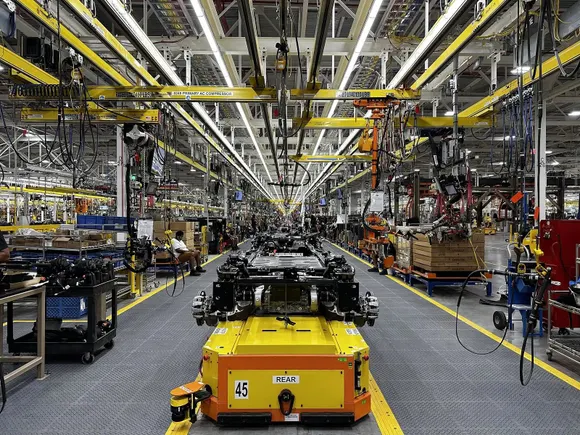
In 2019, General Motors closed its long-standing assembly plant in Lordstown, Ohio, cutting about 1,500 jobs. Three years later, in 2022, Ultium Cells, an electric vehicle battery venture jointly owned by GM and South Korea's LG Energy Solution, began production in Lordstown, with a starting wage of $15.50 per hour, about half of the top wage for GM assembly workers.
However, thanks to labor contracts recently ratified by the United Auto Workers (UAW) with Detroit's Big Three automakers—GM, Ford Motor Company, and Stellantis—laid-off assembly workers in Lordstown can now transfer to Ultium's battery plant in Lordstown. They are no longer paid $15.50 per hour but are covered by the UAW master agreement, under the same contract as assembly workers.
The biggest impact of the new contracts on automakers and their joint-venture partners will likely be "rising costs."
—Mark Wakefield, co-leader of AlixPartners' global automotive and industrial practice
Although the recent UAW strike was not centered on the EV transition, the issue loomed throughout the contract negotiations. After a six-week strike, the UAW reached a tentative agreement with Ford in late October. Less than three weeks later, UAW members ratified contracts with the Big Three automakers.
For nearly all EV battery plants not yet in production, the key provision is that battery workers can unionize under the UAW master agreement, which covers assembly jobs. According to Arthur Wheaton, director of labor studies at Cornell University's School of Industrial and Labor Relations, the lowest-paid workers in the auto industry, including battery plant employees, are the biggest winners.
Therefore, the biggest impact of the new contracts on automakers and their joint-venture partners will likely be "rising costs," said Mark Wakefield, co-leader of AlixPartners' global automotive and industrial practice.
UAW agreements do not directly affect EV battery joint ventures
Of course, although workers will likely choose to unionize, most battery plants have not yet been built, and there are currently no workers to organize or vote to join a union, Wheaton noted.
However, these agreements "do not directly affect joint ventures" because it will take time for the newly union-eligible workforce to form, Wakefield said.
Only GM and Stellantis agreed to include all EV battery plant workers under the UAW master agreement. Both companies even agreed to allow workers to unionize through "card check," meaning they will voluntarily recognize a union if a majority of workers want to form one.
But at Ford, the situation "could get tricky," UAW President Shawn Fain said in a November interview with Bloomberg.
During the strike, battery plants were a sticking point for Ford. In September, Ford CEO Jim Farley said the union was "holding the agreement hostage over battery plants" because the UAW wanted battery plant workers included in the master agreement.
Even without a provision in the Ford contract committing to support unionization at every plant, the victory "still puts pressure on all battery makers in terms of wages and benefits," Wheaton said. During the strike, days after GM said battery plants could be included in the master agreement, Ford's joint venture with SK Innovation raised planned wages at its future plants in Kentucky and Tennessee.
 Construction site of the BlueOval SK battery plant in Glendale, Kentucky.
Ford also agreed that future workers at its still-under-construction battery plant in Marshall, Michigan, can be included under the UAW master agreement, and that "surplus" Ford workers from other plants can transfer to the facility. The plant, slated to begin production in 2026, is part of a partnership with Chinese company Contemporary Amperex Technology Co.
Ford will fully own the plant through a subsidiary, which should ensure Ford does not violate provisions in the Inflation Reduction Act and the Bipartisan Infrastructure Law that bar U.S. companies from claiming tax credits or subsidies for components produced by so-called "foreign entities of concern," including those with ties to China, Iran, North Korea, and Russia.
How foreign partnerships will shape the EV supply chain
The new union contracts should not affect future joint ventures, Wakefield said. These partnerships "are absolutely critical to U.S. automakers," said Ellen Hughes-Cromwick, senior resident fellow for the climate and energy program at the think tank Third Way and former chief global economist at Ford.
Foreign joint ventures "have been leading in battery cell manufacturing," she said, and as automakers begin producing EV batteries, they need that expertise. Eventually, U.S. automakers may build their own battery plants—Ford has expressed a desire to "internalize" production of EVs and their components.
For now, labor costs at battery plants are "tomorrow's problem" for automakers, Wakefield said, adding that since most battery plants are still under construction, automakers are currently focused on assembly plants.
"Many joint ventures had hoped to avoid unionization, but they still have a high likelihood of being unionized anyway," Wakefield said. Automakers are "unlikely" to resist unionization, but aggrieved joint-venture partners might, he said.
"If a joint-venture partner strongly opposes unionization, they could end up dissolving the partnership," Wheaton said.
 Ford Executive Chairman Bill Ford announces the creation of BlueOval Battery Park Michigan.
Wheaton noted that South Korean electronics giant Samsung is known for being strongly anti-union. However, during the strike—and less than a week after GM agreed to include battery plants in its UAW contract—Samsung and Stellantis announced a battery plant joint venture in Kokomo, Indiana. GM is also partnering with Samsung to build a battery plant in Indiana. In contrast, Wheaton said, Samsung's main rival LG does not have an anti-union reputation.
Hughes-Cromwick is excited about the prospects the EV transition brings to U.S. manufacturing and the overall economy. In 2023 alone, at least 17 new EV battery cell or cell component projects were announced in the United States, according to data compiled by researchers at Wellesley College.
"In just the past 12 to 18 months, from nothing, we have created a brand-new battery cell industry," Hughes-Cromwick said. The commitment to electrification "ensures that the U.S. auto industry remains a vital engine of economic activity and job creation."