
Climate Risk Raises Commercial Property Insurance Costs: Five Strategies for CFOs to Cut Costs
Climate change is intensifying extreme weather, and commercial property insurance costs in the United States rose 15% last year, the largest increase in over three decades. CFOs need to reassess risk tolerance, strengthen collaboration with insurers, increase disaster prevention investment, explore innovative products such as parametric insurance, and make good use of data analysis tools to control insurance spending in a "seller's market."
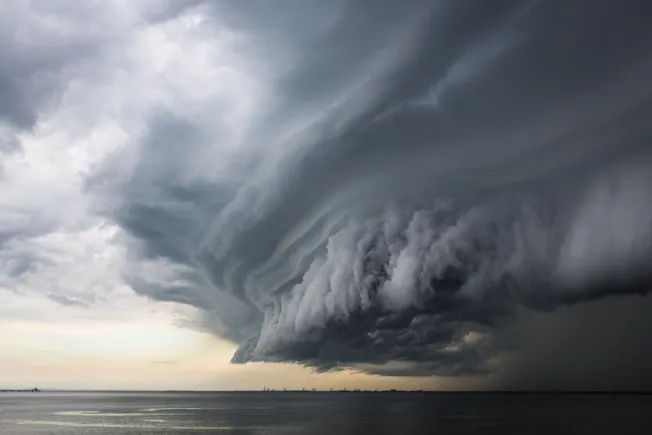
Disasters triggered by climate change, such as tornadoes, floods, and hurricanes, are upending the foundations of CFO risk management. The cost of commercial property insurance in the United States continues to climb. According to data from the Insurance Information Institute, this cost rose by 15% last year, marking the largest annual increase in over three decades. Data from the Swiss Re Institute shows that claims costs for commercial property insurance surged by 30% in the first half of 2023.
Severe weather has created "the most challenging property insurance market since 9/11," said Brandon Thompson, Senior Vice President of Risk at Transwestern, a Houston-based commercial real estate company. "We're going to experience a bumpy ride over the next few years." Thompson noted in an interview that as underwriters raise premiums and withdraw from high-risk areas, CFOs are facing a seller's market for commercial property insurance. "You can't just walk down the street and find an insurance company anymore."
Risk management experts believe that volatility brought on by global warming is forcing CFOs and Chief Risk Officers to accurately assess corporate vulnerabilities and keep insurance costs as low as possible. Solutions range from building closer relationships with underwriters, reinforcing buildings to withstand damage, adopting new insurance structures, and leveraging advanced data analytics. "If you stick to the old ways, you won't be able to move forward," said Zaheer Hooda, Head of North America at Cytora, a London-based InsurTech company.
There are no signs that the frequency of climate change-induced disasters is declining. According to data from the National Oceanic and Atmospheric Administration (NOAA), as of early November this year, the United States has experienced 25 weather-related disasters, each causing at least $1 billion in damages. Between 1980 and 2022, the U.S. averaged only about 8 such disasters per year, adjusted for inflation. NOAA cited inflation-adjusted data this month in the U.S. National Climate Assessment, noting that billion-dollar disasters now strike the U.S. on average every three weeks, compared to once every four months in the 1980s.
Frequent Disasters and Underwriting Contraction
The scope of destruction is expanding. This year, convective storms—bringing heavy rain, lightning, hail, and strong winds—have pushed further north, affecting states in the Great Lakes region and expanding the risk exposure for insurers and businesses. Swiss Re data shows that in the first half of 2023, convective storms caused $34 billion in insured losses in the U.S., a record for a six-month period, accounting for 68% of global natural disaster insurance losses.
When measuring potential loss exposure, insurers have long balanced policy risk between disaster-prone coastal states like Florida and California and lower-risk central states. "That balancing act is no longer working as convective storm losses grow significantly in the central states," Thompson said.
Over the past decade, the cost of extreme weather to insurers has risen faster than inflation-driven increases in labor and building material costs—even considering the high inflationary pressures that began in late 2021. David Hemry, Director of Commercial Strategy at LexisNexis Risk Solutions, noted that so-called claim severity (the average cost per claim) has surged 150% over the past decade, roughly six times the rate of inflation.
Facing losses from severe weather, several insurance companies are seeking to reduce their exposure. State Farm announced in May that it would stop accepting new applications for commercial and personal property insurance in California, making it one of several underwriters exiting the state. Nationwide announced in June that it would take unspecified risk-reduction measures on its small and mid-market commercial property insurance in unspecified states. Hemry said in an interview that hail has severely impacted several regions in recent years, especially along the Interstate 35 corridor in Texas and in Denver and other parts of Colorado. Underwriters who could accurately predict claims in many areas for years are now unable to do so.
"Insurers in Arkansas, Illinois, Kentucky, and Indiana are in a particularly precarious position," said Bill Clark, CEO of Demex Group, in an email response.
Meanwhile, reinsurers, who provide funding to insurance companies, are pulling back. According to an executive order signed by California Governor Gavin Newsom in September aimed at strengthening the state's private insurance market, reinsurers have this year raised premiums nationwide by 30% to 50% for insurers covering catastrophic losses. "The impacts of climate change and these billion-dollar losses are really putting pressure on reinsurance, and reinsurance ultimately determines what terms you can get in the retail insurance market," Thompson said.
As insurance costs rise, CFOs and finance executives responsible for assessing risk and securing insurance may gain more influence in the C-suite. "Risk management may need a bigger seat at the table than it has had in the past few years," he said.
Five Strategies for CFOs to Control Costs
Risk management experts say that with a larger role, CFOs can limit the costs of climate change through the following five steps:
1. Conduct a Fresh Review of Risk Tolerance
Risk management experts say CFOs who thoroughly assess their company's ability to withstand extreme weather damage will adapt more quickly to rising commercial property insurance premiums and the prospect that inflation could exceed the Federal Reserve's 2% target in the coming years. CFOs should no longer view insurance as a routine expense item that can be deferred year after year. Finance executives may need to adjust their insurance programs more frequently and use data that simulates weather as well as labor, construction, and other costs to more accurately assess their company's needs. CFOs will likely find that, at least for the foreseeable future, they need to allocate more budget for insurance. Hooda said in an interview that, as always, shopping around for better-value insurance can help control costs. However, Hooda reminded CFOs to keep the fundamental principle in mind: "First, accept the reality of higher premiums and adjust your profit expectations accordingly."
2. Strengthen Collaboration with Underwriters
Experts say that as the commercial property insurance market adapts to extreme weather shocks, CFOs should increase the frequency and depth of their engagement with underwriters. Finance executives should contact underwriters up to 180 days before submitting an application, rather than the usual 90 days. They should also use data to detail their risk mitigation and loss limitation measures. "Be sure to prepare a high-quality submission with loss control explanations," Thompson said.
3. Redouble Efforts on Loss Prevention
Risk management experts say CFOs should not overlook the proven strategy of reducing insurance costs through improvements such as installing wind-resistant shutters, flood barriers, and fire suppression systems. According to data from the National Institute of Building Sciences, every $1 invested in limiting property damage—through retrofits or adopting updated building codes—can avoid up to $13 in losses. "It's not just property risk; it's also liability risk from people getting injured on the property, break-ins, etc.," Hemry said. Several experts noted that after the pandemic lowered occupancy rates, many commercial property owners neglected maintenance. Instead, with the Federal Reserve having raised its benchmark interest rate to a 22-year high, CFOs are more focused on the high cost of refinancing debt. "We're in a vicious cycle: lower occupancy, maturing loans, which can lead to a pullback in reinvesting in properties, and that only drives claim severity higher," Thompson said.
4. Consider Insurance Innovation
Risk management experts say alternatives to traditional commercial property insurance can fill gaps left by policies that have been reduced or canceled due to frequent severe weather. CFOs responsible for properties in disaster-prone areas may consider so-called parametric insurance, which pays a fixed amount based on the characteristics of a damaging event rather than the cost of repairs. CFOs typically use parametric insurance as a supplement to or replacement for traditional policies. "From a CFO's perspective, it provides a certain level of stability," Hooda said, while noting that loss payout ratios for parametric insurance are often less favorable than traditional policies.
5. Dive into Data Analytics
"Big data has been around with insurers for a long time," said Gary Sullivan, Senior Director of Emerging Risks at the American Property Casualty Insurance Association, in an interview. But now, insurers can use advanced analytics to more accurately measure risks such as windstorms and wildfires, identify vulnerabilities, and uncover new opportunities. "Historically, the insurance industry has been quite slow-moving and conservative by nature," Hemry said. Insurance startups are disrupting established companies by using new methods of data collection and analysis. For example, computer analysis of aerial photos of roofs can accurately assess risk over large areas, thereby reducing claims and premiums. "InsurTech is integrating with underwriters to help them do things they couldn't do in the past 100 years because it's not in their DNA," Hemry said. Risk management experts advise CFOs to ask underwriters how they use artificial intelligence, data analytics, and other advanced technologies to measure risk. Additionally, when preparing insurance applications, CFOs should consider using customized risk management systems "to tell a story that avoids being lumped into overall market trends," Thompson said.
Ultimately, higher premiums driven by destructive weather may attract new capital into the insurance industry. The commercial property insurance market will stabilize, and CFOs may find risk management costs more manageable. "People will see this as an entrepreneurial opportunity and flood in, and you'll see things improve over time," Hooda predicted.