
The History of PFAS: From World War II to the 'Forever Chemicals' in Non-Stick Pans
PFAS (per- and polyfluoroalkyl substances), discovered in the 1930s, have been widely used in industry and consumer products due to their water-resistant and durable properties, but only came under regulation in the early 2000s. This article reviews their evolution from the World War II atomic bomb project to non-stick pans, and mentions related lawsuits and health risks.
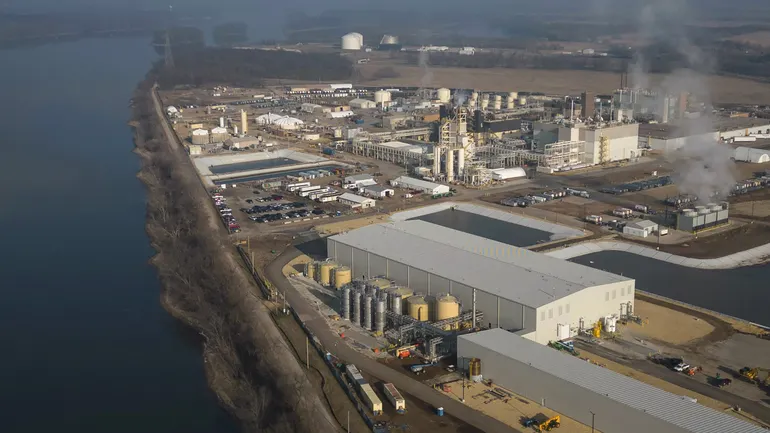
Per- and polyfluoroalkyl substances (PFAS) became the focus of high-profile lawsuits this year against chemical manufacturers 3M and DuPont de Nemours. However, these synthetic fluorinated chemicals, known as fluorocarbons when discovered in the 1930s, were not widely regulated until the early 2000s. Dubbed "forever chemicals" for their slow decomposition, their toxicity was not even known to the U.S. Environmental Protection Agency (EPA) until the late 1990s.
But times have changed. Dozens of U.S. cities and states have sued manufacturers such as 3M and DuPont, alleging they added forever chemicals to products ranging from cookware and cleaning supplies to firefighting gear, polluting natural resources and endangering public health. Studies show that exposure to certain levels of forever chemicals increases cancer risk, reduces fertility, and damages the immune system.
However, these chemicals, with their unique water-repellent, durable, and heat-resistant properties, have become critical components in products across industries such as medical devices, aircraft, and semiconductors.
Public concern over PFAS has reignited scrutiny of their checkered history, a background that helps regulators and manufacturers understand why the chemicals became ubiquitous and how to protect the public from their harmful effects.
How PFAS went from unbranded chemicals to everyday product ingredients

Origins of forever chemicals
PFAS have existed for more than 70 years. Their first form—polychlorotrifluoroethylene (PCTFE)—was discovered in 1934 by Fritz Schloffer and Otto Scherer at the German chemical giant IG Farben. PCTFE was not commercialized until the early 1950s by oil and pipeline manufacturer M.W. Kellogg (now KBR) under the name Kel-F. 3M acquired Kel-F in 1957 and produced it until 1996, when it sold the rights to Daikin Industries. The chemical is now produced as Neoflon PCTFE and used in semiconductors, chemicals, and electronic components.
PCTFE is a precursor to more well-known forever chemicals. Polytetrafluoroethylene (PTFE), widely known as Teflon, is famous for its use in nonstick cookware, waterproof clothing, and personal care products such as nail polish.
However, Teflon was discovered by accident. In 1936, Roy J. Plunkett, who would become the inventor of Teflon, joined DuPont after graduating from Ohio State University. The scientist was assigned to develop a new fluorocarbon refrigerant replacement, as the company hoped to expand its lucrative portfolio of chemical patents—chemicals that, like their successors PFAS, were known for uses as lubricants, sealants, and water repellents.

In 1938, during project work, Plunkett and his assistant Jack Rebok discovered that a frozen, compressed sample of the fluorocarbon tetrafluoroethylene spontaneously formed a white, waxy solid—the substance later named PTFE and trademarked as Teflon.
"The next question was, 'What are you going to do with this stuff?'" Plunkett said in a 1986 interview with the Science History Institute.
During World War II, DuPont used Teflon in the Manhattan Project to build the atomic bomb, as gasket and valve material to contain toxic uranium hexafluoride in pipes at the uranium plant in Oak Ridge, Tennessee.
"People believed (PTFE) was vital to this wartime project," said Malcolm Renfrew, a DuPont chemist who helped develop Teflon, in an oral history.
Meanwhile, DuPont scientists began studying the new polymer. After the war, scientists at the chemical manufacturer published academic papers detailing Teflon's various uses and its ability to withstand high temperatures and "hostile environments," Plunkett wrote in "The History of Polytetrafluoroethylene: Discovery and Development."
"The trick with PTFE is that it really took many people, decades of research and development, and public funding, and it was fused through the Manhattan Project, to finally get the kind of Teflon they later released," said Rebecca Altman, a writer and sociologist specializing in the history of chemistry, plastics, pollution, and environmental legacies.
Early milestones in the invention and spread of PFAS
- 1934The first form of PFAS, polychlorotrifluoroethylene (PCTFE), was discovered by Fritz Schloffer and Otto Scherer at IG Farben in Germany.
- 1938Roy J. Plunkett and Jack Rebok accidentally discovered polytetrafluoroethylene (PTFE) when a frozen, compressed sample of tetrafluoroethylene spontaneously formed a white, waxy solid.
- 1945DuPont trademarked PTFE as Teflon.
- 19453M (then named Minnesota Mining and Manufacturing Company) acquired the Simons process from Joseph Simons, enabling it to expand production of fluorochemicals and other PFAS.
- 1951DuPont's plastics manufacturing plant in Parkersburg, West Virginia, began producing Teflon.
- 19533M scientists Patsy Sherman and Samuel Smith discovered perfluorooctanesulfonic acid (PFOS), a substance later used for years in various products including Scotchgard.
- 1954French engineer Marc Grégoire coated his wife's cookware with Teflon. Two years later, Grégoire founded Tefal to produce Teflon-coated cookware.

PFAS's difficult wartime beginnings
DuPont trademarked Teflon in 1945. Although the federal government initially planned to build a dedicated plant to produce the new substance for the war, researchers found PTFE difficult to process and the idea was abandoned, according to a document released by the Atomic Energy Commission in 1970.
"It wasn't ready yet," Altman said.
Renfrew and his colleagues ran a pilot polymerization plant to produce PTFE at DuPont's plant in Kearny, New Jersey, but the unit encountered problems that ultimately turned tragic. Three scientists in DuPont's organic chemicals department died from exposure to PFAS-containing chemicals, and later two scientists from Renfrew's laboratory died in an explosion at the Kearny plant in 1944.
"The pilot plant stage is where processes are prone to accidents," Renfrew said in his oral history. "Even under the best circumstances, danger exists because you're doing new things with amplified quantities. So we had trouble."
These incidents became early signs of PFAS's potential dangers.

The 'Simons process' expands production
Beyond wartime applications, DuPont also wanted to produce Teflon on a commercial scale. Company scientists conducted research on how to manufacture PTFE more broadly. Around the same time DuPont was researching Teflon, a chemistry professor at Pennsylvania State College (now Penn State University) was producing liquid fluorocarbons.
Joseph A. Simons made "more complex fluorocarbons" by reacting materials with fluorine compounds under milder conditions, which helped reduce the risk of explosions or fires when handling the chemicals, according to "3M's Chemical History." The Simons process, named after him, helped expand production of fluorochemicals and other PFAS. Like Teflon, the method was not made public until after the war.
In 1945, 3M (then named Minnesota Mining and Manufacturing Company) purchased the process from Simons to produce perfluorooctanoic acid (PFOA)—another PFAS that resists heat, oil, stains, grease, and water, used in stain-resistant carpets and later firefighting foam, and also used to make Teflon.
At the time, DuPont was still figuring out how to process Teflon, producing it only in small quantities and at high cost. Eventually, DuPont contacted 3M for ways to improve its Teflon production process, Altman said. 3M supplied PFOA to DuPont, helping it successfully launch Teflon production.
"I don't know if it was the final brick, but it was certainly one of the last development breakthroughs when they figured out the full chemistry of how to start this process," Altman said.

The rise of a revolutionary chemical
After the war, publications such as Popular Mechanics began reporting on fluorocarbons—a new chemical promising revolution. "Consider, for example, the possibility of a lifetime lubricant sealed into your car's engine; a paint that would keep a house from burning; pots and pans that really push off burned food; and a cleaner that would get a mechanic's work clothes clean in a few wipes," the magazine wrote in 1952.
In 1946, DuPont announced the construction of a new plastics manufacturing plant in Parkersburg, West Virginia. The plant began producing Teflon in 1951. In the following years, the company expanded the chemical's uses to cookware, stain repellents for fabrics and textiles, and industrial coatings.
Within 20 years of its first discovery in 1934, PFAS in its various forms went from a laboratory accident, to a component of the atomic bomb project, to an ingredient in everyday household products.
"Products made from PTFE touch people's lives in countless ways every day, from cookware to wire insulation and automotive gaskets; from stain repellents to dome roofs; from ski suits and space suits to life-saving human body parts," Plunkett wrote in his 1986 paper. "With its unusual properties and applications, PTFE has become an indispensable part of the machinery running today's economy, influencing construction, medicine, energy and environmental conservation, firefighting, space travel, electronics, and the military."
News graphics developer Jasmine Ye Han also contributed to this report.