
Operations
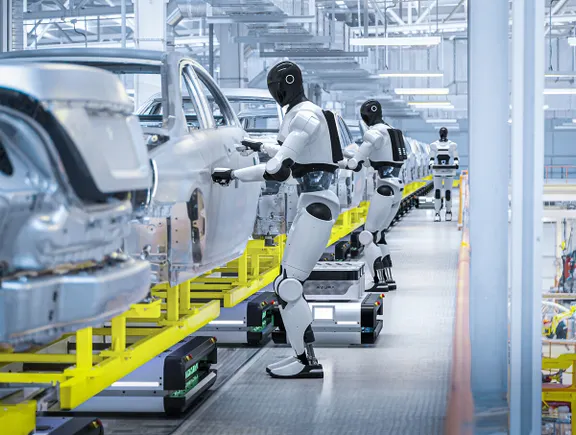
Experts say FCC ban on foreign robots is actually a nearshoring strategy
The U.S. Federal Communications Commission (FCC) updated its covered list on July 28, banning the import and sale of foreign-made mobile robots and connected power inverters, sparking heated discussion among experts. Some experts believe this move aims to boost domestic robot production, but others worry it may affect allies and impact the supply chain.

GlobalFoundries Q2 Revenue Reaches $1.79 Billion, Completes Synopsys Acquisition
GlobalFoundries' second-quarter revenue was $1.79 billion, up 9% sequentially, with record year-over-year growth in the communications infrastructure and data center end markets. The company completed the acquisition of Synopsys' ARC processor IP business and received a $375 million grant from the U.S. Department of Commerce to advance quantum manufacturing.
Strong demand for data center generators pushes Caterpillar quarterly sales past $20 billion
Caterpillar reported second-quarter results with record sales and revenue of $20.5 billion, up 24% year-over-year, driven by demand for data center generators, construction equipment, and the energy sector. The company raised its full-year guidance and resumed production of 10-megawatt gas engines.
Loftware leverages AI to optimize packaging and labeling processes
In the supply chain, product, compliance, shipping, and packaging data must be transmitted across multiple parties, and even the most robust internal AI management within a company cannot ensure that all trading partners have consistent information. Loftware's AI system, Loftware Connect, aims to address this pain point by using a publish-subscribe model with AI assistance, enabling suppliers, factories, logistics providers, and others to share unified label standards, reducing redundant work and errors. CEO Jim Bureau spoke with Manufacturing Dive, discussing how the system shortens the label template creation cycle (from 4-5 months to a shorter period), verifies shipping notices through real-time data checks (e.g., 50 products actually packed as 50), and advises companies to first move to the cloud to manage packaging and labeling issues from an enterprise-level perspective.
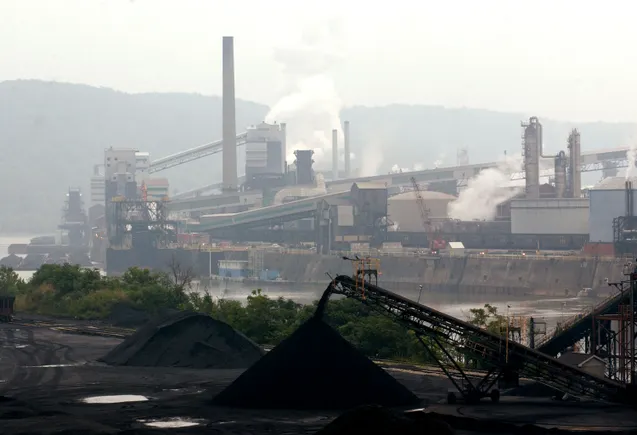
U.S. Steel becomes growth engine one year after Nippon Steel acquisition
One year after Nippon Steel acquired U.S. Steel, the latter has become the group's growth engine. Latest quarterly data shows U.S. Steel contributed 32.2 billion yen in base business profits, accounting for nearly 30% of the group; the company raised its fiscal 2026 profit guidance for U.S. Steel to 180 billion yen and plans to invest $11 billion in the U.S. by 2028.

Eric Trump Invests $638 Million in Space-Eye and McKinley Acquisition Merger
Eric Trump announced an investment in the $638 million merger between defense geospatial technology company Space-Eye and special purpose acquisition company McKinley Acquisition Corporation. McKinley has secured up to $75 million through a private placement of public equity. The combined company will operate under the name Space-Eye, with the transaction expected to close in the fourth quarter.
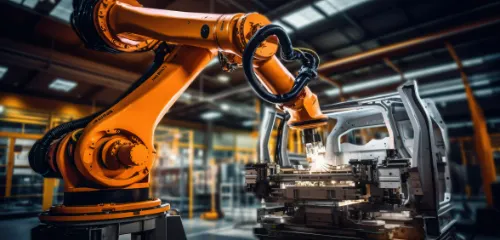
Three Major Bottlenecks: How Traditional Data Historians Hold Back Modern Manufacturers
Traditional data historians were originally designed to serve a single factory, but now face cross-site, high-frequency, multi-system industrial data flows, and their limitations are increasingly prominent. Benjamin Corbett, Solutions Engineer at InfluxData, points out that changes in data forms and working methods have made these legacy tools bottlenecks. This article outlines their three core bottlenecks: data silos, insufficient scalability, and closed interfaces, and explores a modernization path oriented toward business outcomes and deploying dedicated time-series platforms.
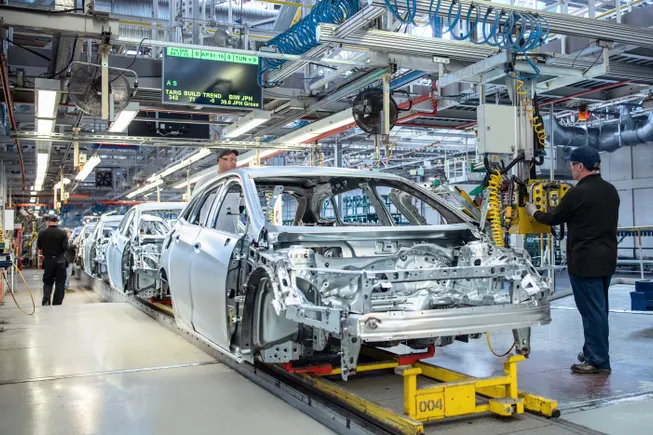
Self-Powered, Customized on Demand: A Decision Guide to Energy Independence for Manufacturers
The U.S. electricity supply-demand gap is expected to emerge within two years, potentially reaching 175 gigawatts by 2030. Manufacturers, whether or not they rely on grid expansion, face risks of outages, power quality issues, and costs. Behind-the-meter power generation (BYOP) offers a breakthrough, with fuel cells standing out due to high reliability, low emissions, and rapid deployment. This article reviews mainstream options and key selection criteria to support corporate energy independence decisions.

Resilience and Lilly jointly invest $750 million to expand drug production capacity in Cincinnati
Resilience and Lilly announced on Thursday that they will jointly invest $750 million to expand pharmaceutical production in the Cincinnati, Ohio area, including additional capacity for GLP-1 weight-loss injections. The expansion will add at least 400 new jobs, bringing Resilience's total workforce across two facilities to over 1,400 employees. Since the partnership began in 2023, the two companies have produced more than 150 million doses of medication. Site preparation is underway, with full production expected to begin in early 2027.
Boeing Q2 revenue of $24.6 billion, recovery momentum significantly strengthened
Boeing reported second-quarter 2026 results, with revenue up 8% year-over-year to approximately $24.6 billion, with growth across all three business segments. The company's CFO stated that full-year cash flow is expected to turn positive and plans to increase production of the 737 and 787. Additionally, Boeing is advancing capacity expansion projects in Arizona and South Carolina and engaging in contract negotiations with unions.